Weak or manual product recommendations
Recommendations should add an item, not repeat the one they are looking at
Maestra Platform picks complements from real purchase relationships, the all-in-one retention marketing platform for ecommerce brands, configured by a forward-deployed marketer.
+45.3%
more items per order among shoppers who engaged with recommendations
From the Blue Q case studyBrands running on Maestra






The problem
Your recommendation widget doesn't know what it's looking at
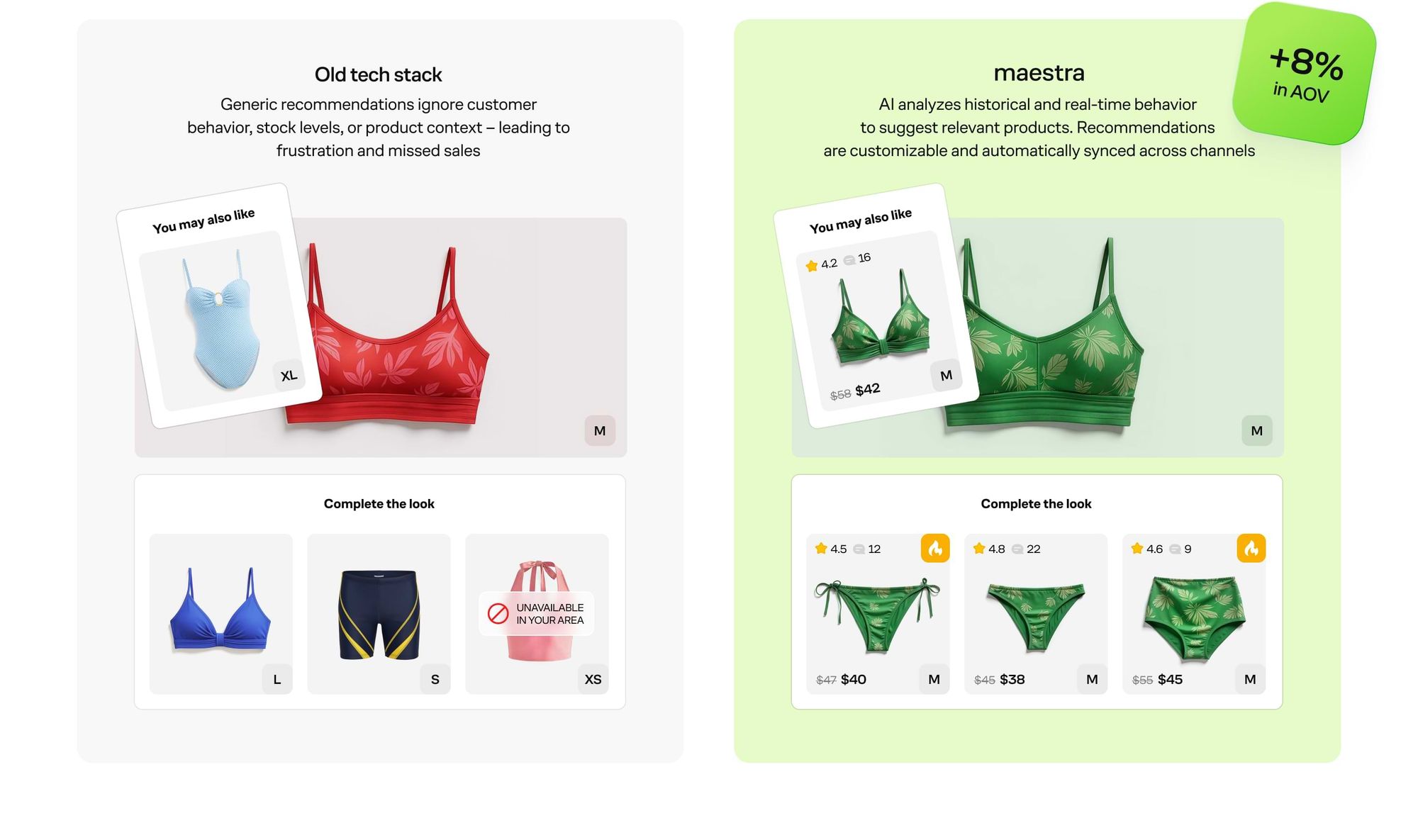
Basic "you might also like" widgets show the same popular items to everyone, regardless of what a customer is actually viewing. When the engine can't read product attributes like color, size, or material, it recommends the wrong variant, the wrong fit, or an item that's already out of stock.
What we hear from brands
an ethically sourced jewelry brand needs better website and email personalization to lift conversions and cross-sell new jewelry lines
a leather handbag brand says its current product recommendations are static and not predictive
a premium womenswear brand calls its merchandising functionality damagingly bad, relying on manual picks instead of algorithmic intelligence
The new way
One set of recommendations, synced everywhere a customer shops
The same product logic that powers your website also fills recommendation blocks in email, SMS, messengers, and even in-store POS. A customer who browses a product on-site sees a relevant follow-up in their next email, not a generic bestseller list pulled from a different system.
Customer proof
The engine learned which gear actually goes together

Generic similarity had been pairing products that share a tag rather than a use. Teaching it the real relationships between items made recommendations part of nearly a tenth of sales.
8.9%
of sales influenced by the recommendation engine

How it works
Who does what during the switch
You approve the plan
Access to the current stack and a yes to the migration plan is the whole ask on your side.
Your marketer rebuilds
Data, flows, and campaigns are rebuilt on Maestra while the tools you are leaving keep sending, including the domain warm-up that protects deliverability.
You switch when it is ready
Two to four weeks for growing brands, three to seven for the most complex setups, and 99% of the work sits with your marketer either way.
The platform
No engineering to run it day to day
Marketers configure the flows, the widgets, and the personalization rules themselves. Support and operation need no developer time, which is what makes a small team able to run all of it.
Including
Your forward-deployed marketer
Included, not an upsell
The forward-deployed marketer comes with the subscription rather than as a services line item, and the work is implementation: building flows, launching campaigns, and fixing what the reporting exposes.
Included with every subscription, not billed separately
Implementation work, not advice on a call
Weekly calls and a shared Slack channel
Replace your stack
Count the integrations you maintain
Every point tool in a stack comes with a connector somebody has to keep alive, and the customer data ends up split along those seams. Consolidating removes the connectors along with the tools.
Hundreds of use cases, one place to browse them
If you would rather read than talk, the use cases are on the site and organized by what you are trying to fix.